Alain SomphoneTrained on Helvetica. Working in TypeScript.

The Eighth Try

There's a feeling I want this illustration to carry. Old New England home, quiet, the kind that's been there a hundred years. Old clapboard. Mature trees. That East Coast fall feeling. Warm and inviting but private. A demure sense of peace.

The Tankfarm essay is about a propane company competing for homeowners who'd trusted other providers for years. So a propane tank lives on the side of the house, tucked against the siding. The essay needs it there. But the hero of the image is the home.

The first try is sparse. A single small domestic propane tank beside one modest simple house, set in a wide, quiet, nearly empty rural landscape. I'm leaning hard on negative space. Vast cream, low horizon, restraint.
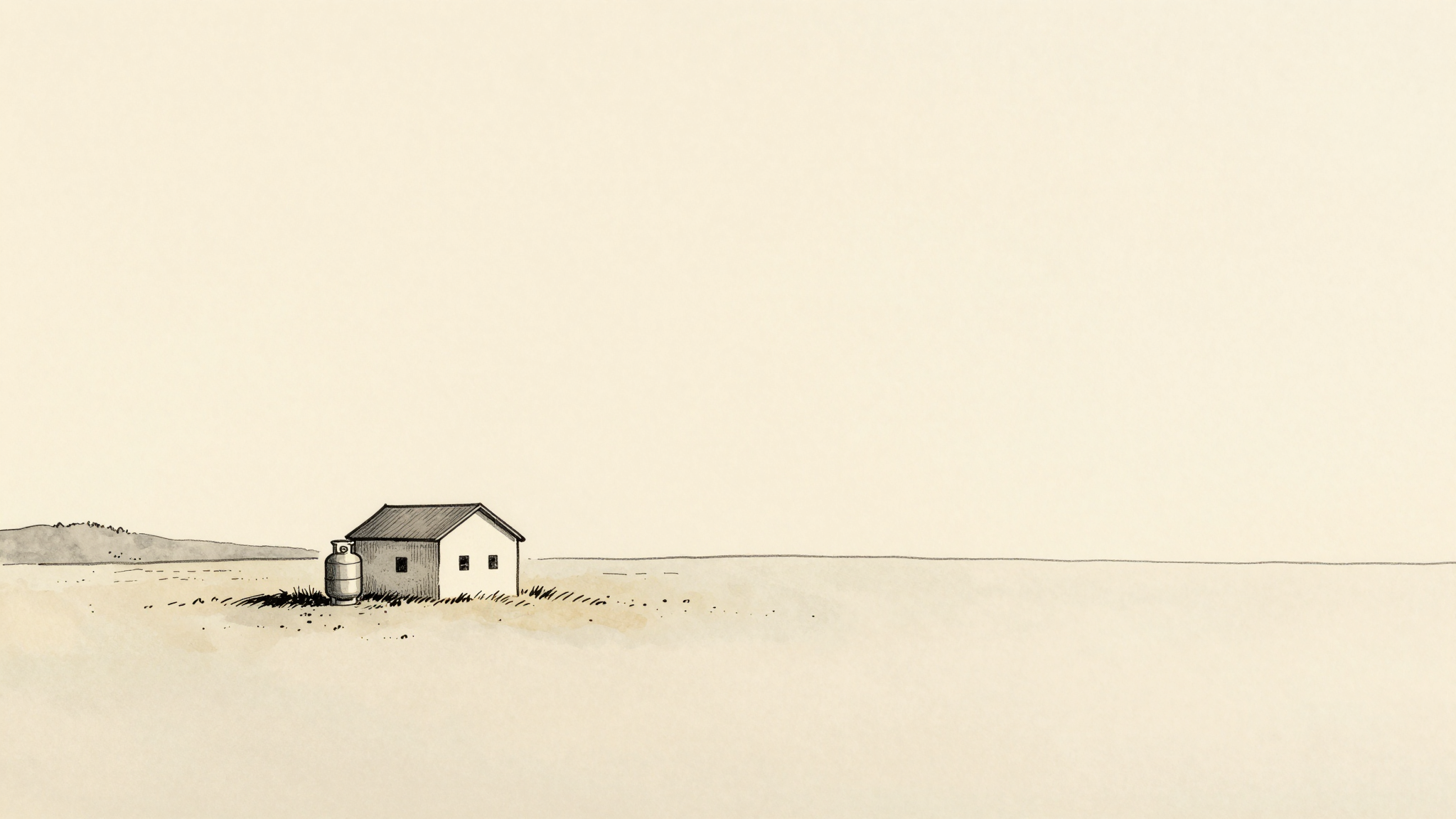
A loose pen-and-ink watercolor illustration: a single small white clapboard house with a dark pitched roof sits low on the horizon of a vast cream-paper field, with a small upright bottle-shape propane tank tucked against its left side. A faint hill is suggested in the distance. The composition reads desolate and sparse.
The first try, leaning hard on negative space. A lonely shack on an empty horizon, a small bottle-shape tank tucked beside it.

The image comes back exactly as I'd asked. And the feeling is wrong. The horizon's too empty. The house is a shack. It reads abandoned, lonely, disconnected.

I keep going. The second prompt warms it up. Lived-in. A tree. A path. A lit window. Smoke from the chimney.
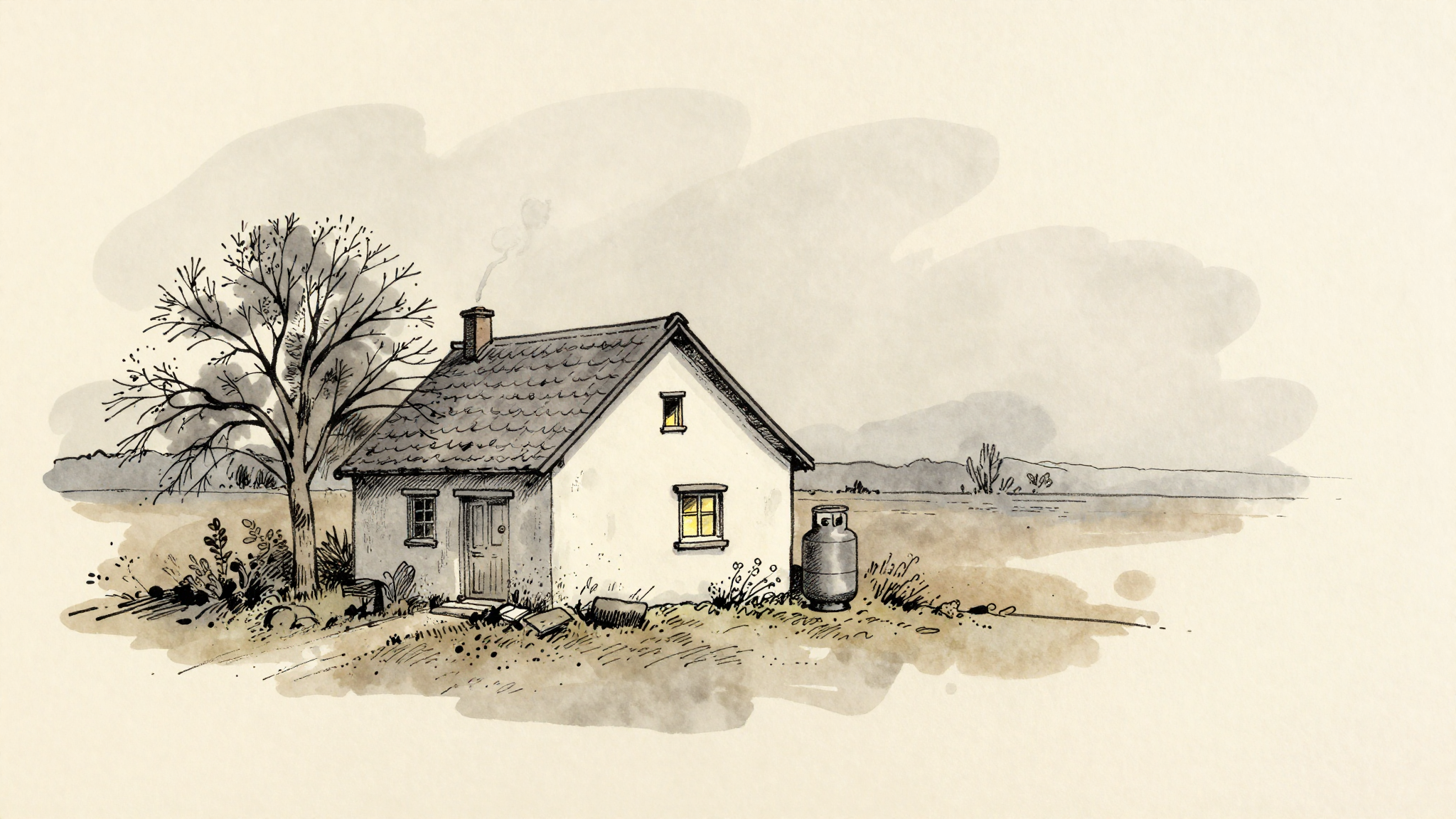
A loose pen-and-ink watercolor illustration: a small storybook cottage with white clapboard siding and a pitched roof. A bare deciduous tree leans over the left side of the house; a soft path approaches the front door; one window glows warm yellow; a thin wisp of smoke rises from the central chimney. A small upright propane tank sits against the right side. The mood is warm and lived-in but the house is humble in scale.
The second try. Warmth and lived-in details, but the house is too humble.

Closer. The mood is warm now, but the house is a cottage. A little storybook. Too humble for what I'm picturing.

The third prompt upgrades it. Connecticut-estate character. Long winding driveway. A pair of mature flanking trees. Established lawns and hedgerows. Quiet prosperity and care.
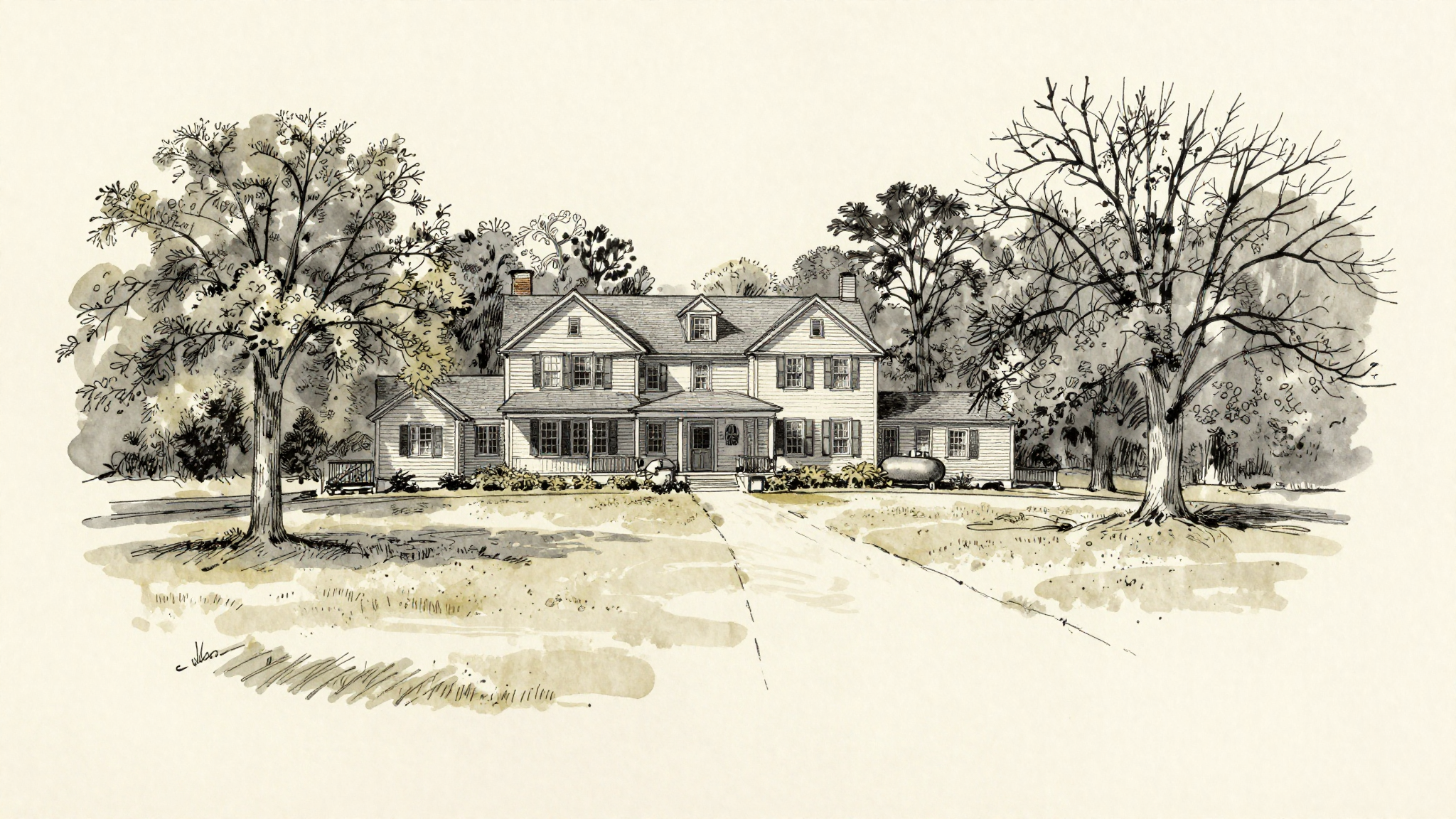
A loose pen-and-ink watercolor illustration: a substantial two-story New England colonial home with white clapboard siding sits at the end of a long winding gravel driveway, flanked by a pair of mature deciduous trees in full leaf. Established lawns and hedgerows in soft warm-grey washes. A small dark shape near the right side of the house indicates a propane tank.
The third try, after upgrading the prompt to Connecticut-estate character. The home lands; the tank shrinks to a small blob near the side.

The home lands. It's the one I had in my head. The tank sits small and tucked at the side. Which is fine. The tank was never the hero.

Even so, I want to lock in its shape so the model gives me that consistently.

So I start tightening. The fourth prompt adds an [IMPORTANT] block, describing the tank as a “tall rounded bottle-shaped cylinder with a small dome top.” The fifth strips down, but the ink line gets too loose for Sempé. The sixth nails the architecture (federal-era colonial, white clapboard, black shutters), but the line is still too loose.
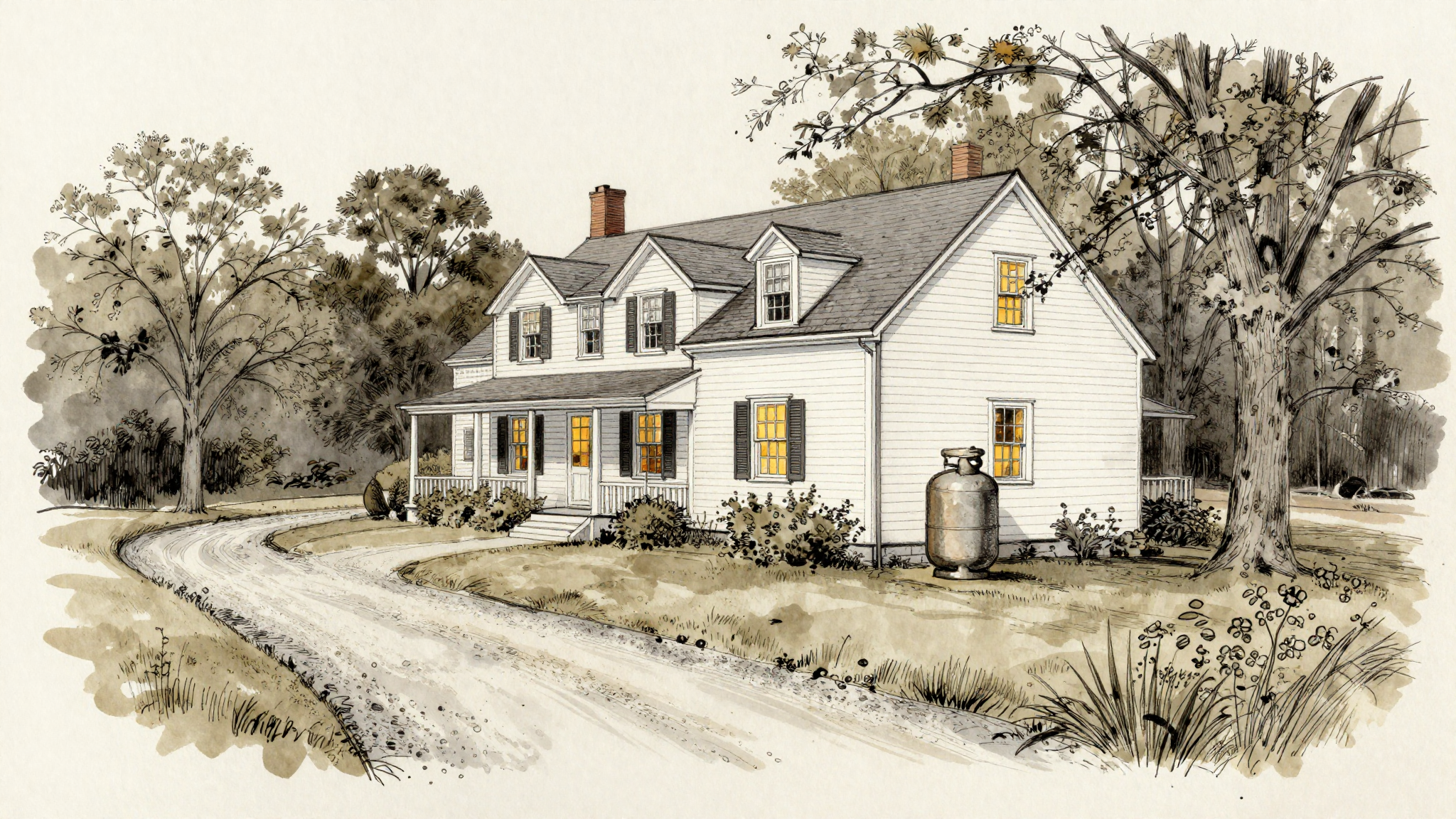
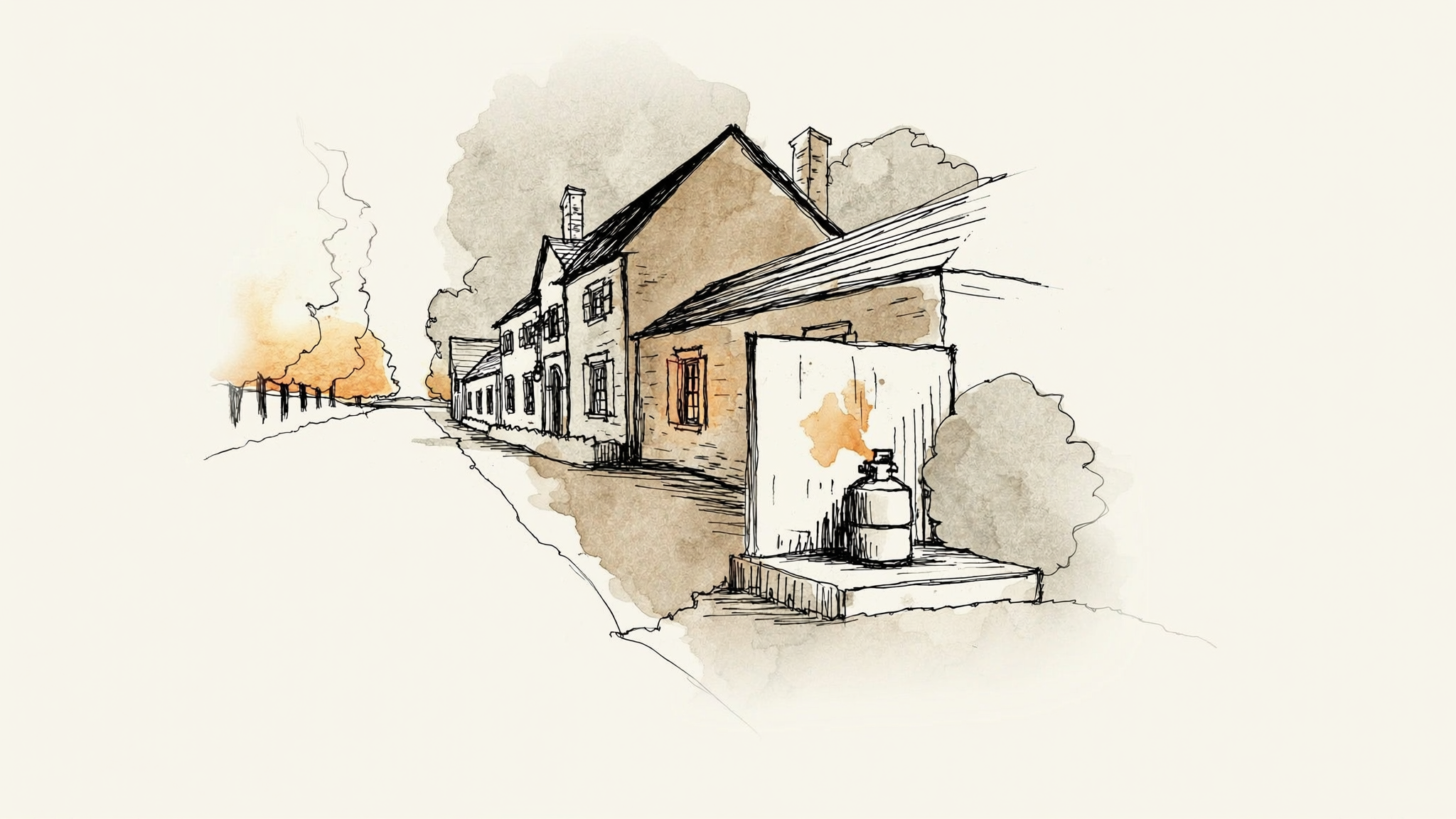
The fourth try: a substantial Connecticut colonial with two flanking trees, a tall vertical bottle-shape propane tank with a small dome top stands prominently to the right of the front porch.The fifth try: a foreshortened side view of a house with a strange large rectangular wall feature in front, the tank a small upright cylinder on a low pad to the right. The architecture has slipped and the ink line is too loose for Sempé.The sixth try: a tightly drawn federal-era colonial with white clapboard and black shutters, mature trees behind, but with too-loose line work that has drifted from the Sempé register. A small unidentifiable rust-colored object on the ground in front, where the tank should be.
Tries four, five, and six. The architecture tightens. The line loosens. The tank keeps being wrong.

Each round, I'm being more specific. Each round, the tank goes more wrong.

The seventh switches to pure pen-and-ink with lots of breathing room.
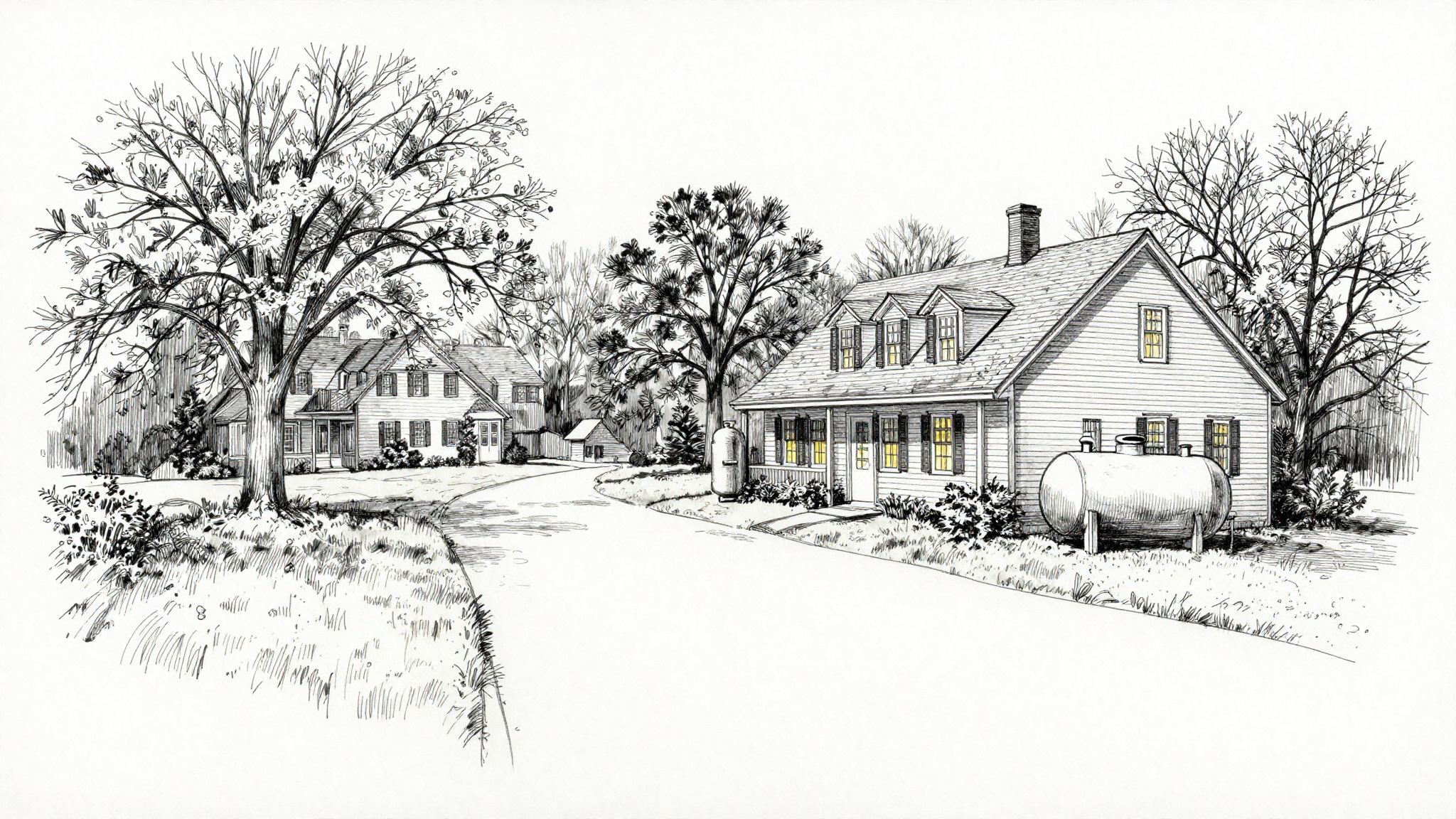
A loose pen-and-ink illustration on bright paper: two New England colonial homes are visible. A tall vertical cylindrical propane tank stands at one front corner; a horizontal cylindrical tank rests against the other house. No real residential property would have both configurations at opposite corners.
The seventh try. The model gives me both a vertical and a horizontal tank, at opposite corners. No real home does this.

The model gives me both. A tall vertical tank at one corner. A horizontal cylinder at the other. No real home does this.

Then I see it. I'd worked at Tankfarm. I know these tanks. The 120-gallon vertical cylinder, sometimes paired with a second one side by side. The 250-gallon horizontal torpedo on welded steel saddles, the kind larger homes use. A home like the one I'd drawn calls for the horizontal one. The first three tries hadn't described the tank. The model had picked the horizontal on its own. Once I started describing it, I'd been describing the vertical. It didn't fit the home I had in mind.

So I go to reference. Pull up images of 250-gallon residential propane tanks. Read the spec sheets. Take notes on what's actually there. Horizontal cylinder. Rounded convex ends. Two welded steel saddles. A small concrete pad. Partially screened by a low shrub. Tucked tight against the side wall, not floating in the yard.

I write all of that into the prompt. The eighth try.
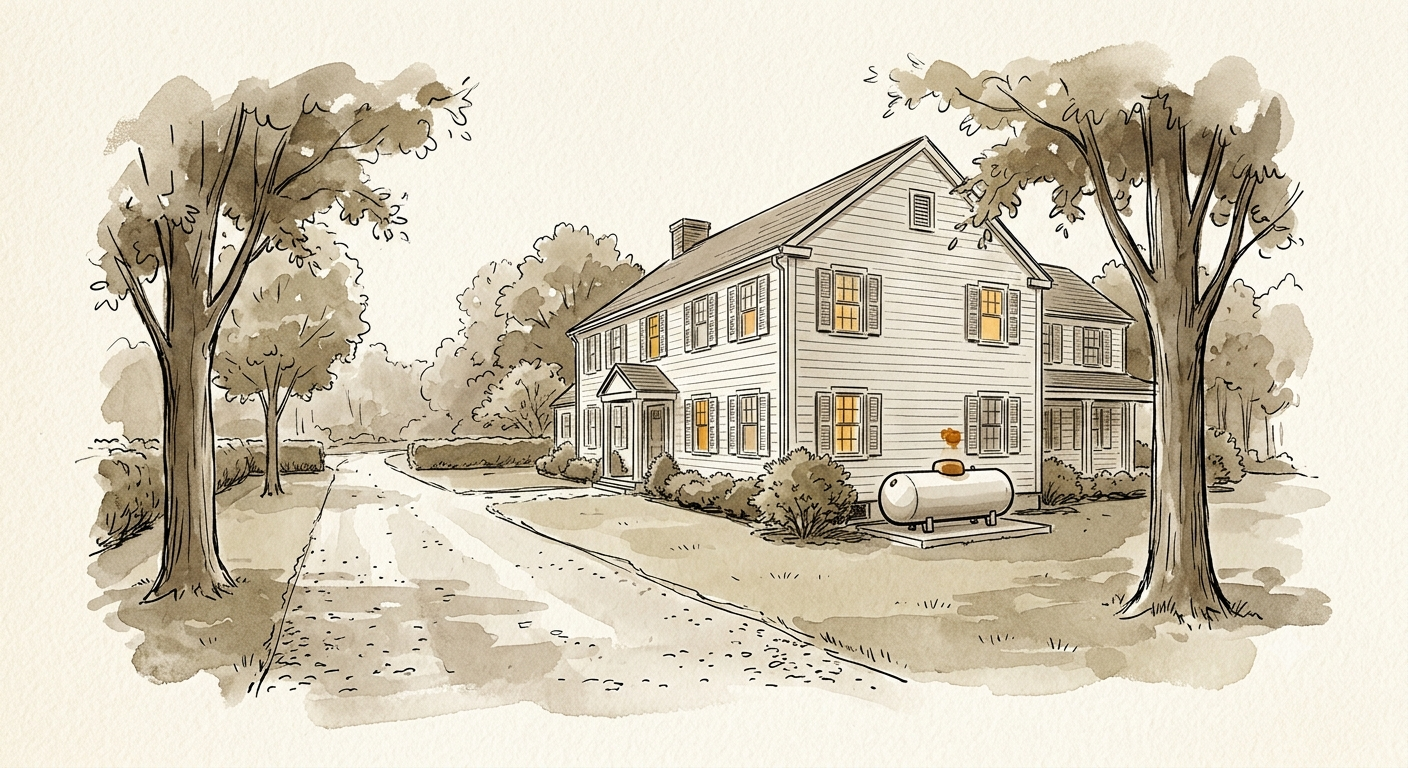
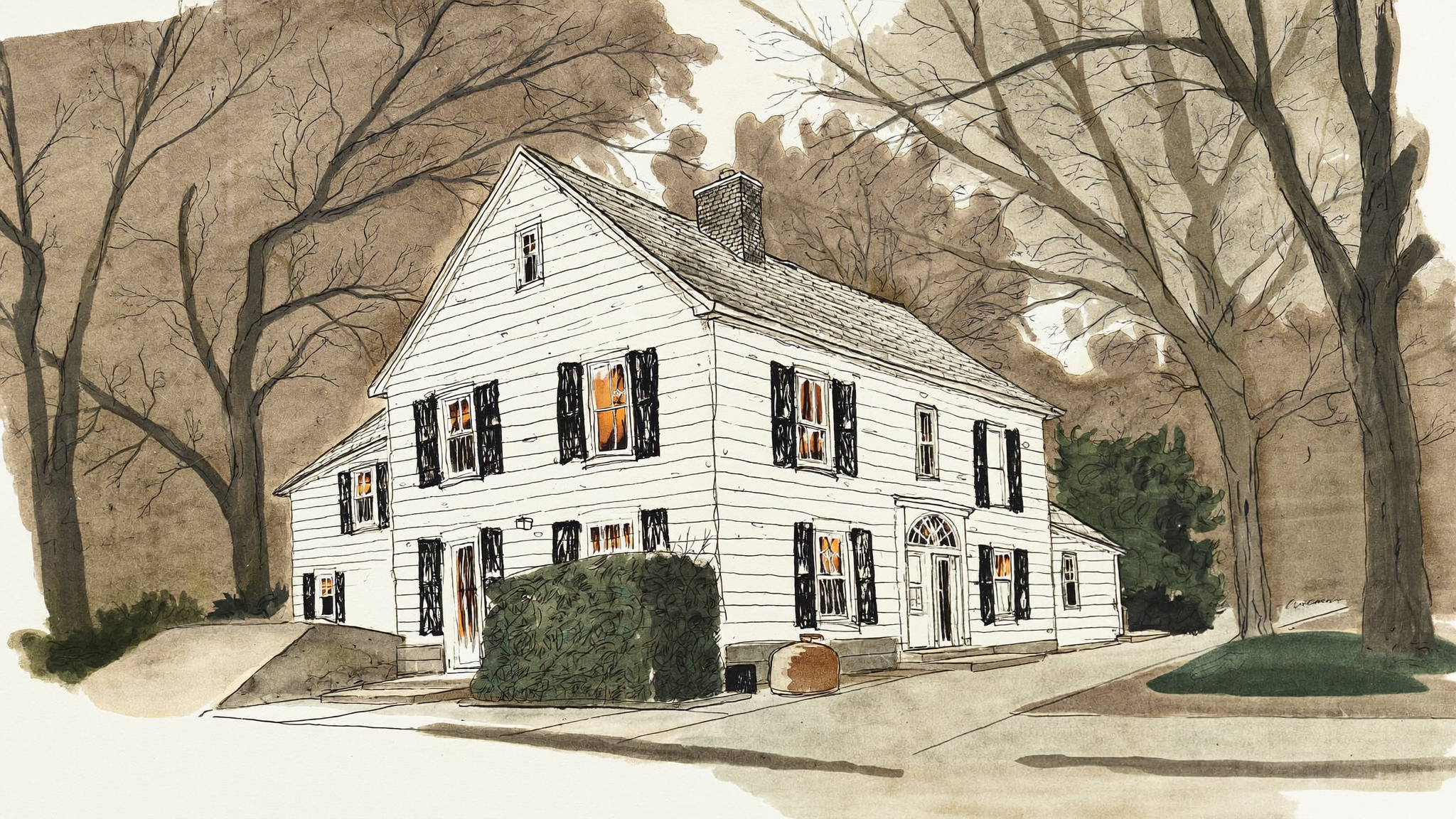
The locked hero illustration: a substantial New England colonial home at the end of a long winding tree-lined driveway, late-afternoon sepia mood, soft amber glow at the windows. Tucked tight against the right side of the house, on a small concrete pad and partially screened by a low shrub, a 250-gallon horizontal propane tank rests on its welded steel saddles. The tank reads as the small quiet detail it was meant to be.
The eighth try, after going to reference for the 250-gallon horizontal torpedo specification. The home and the tank both hold.

The home carries the same spirit as the one I'd drawn in the third image. The tank, this time, is the right object. Tucked low against the siding, half behind the shrub. A reader's eye lands on the home first. The tank is a quiet detail, the way I'd wanted from the start.

Once the tank looked like a tank, the rest could breathe.